
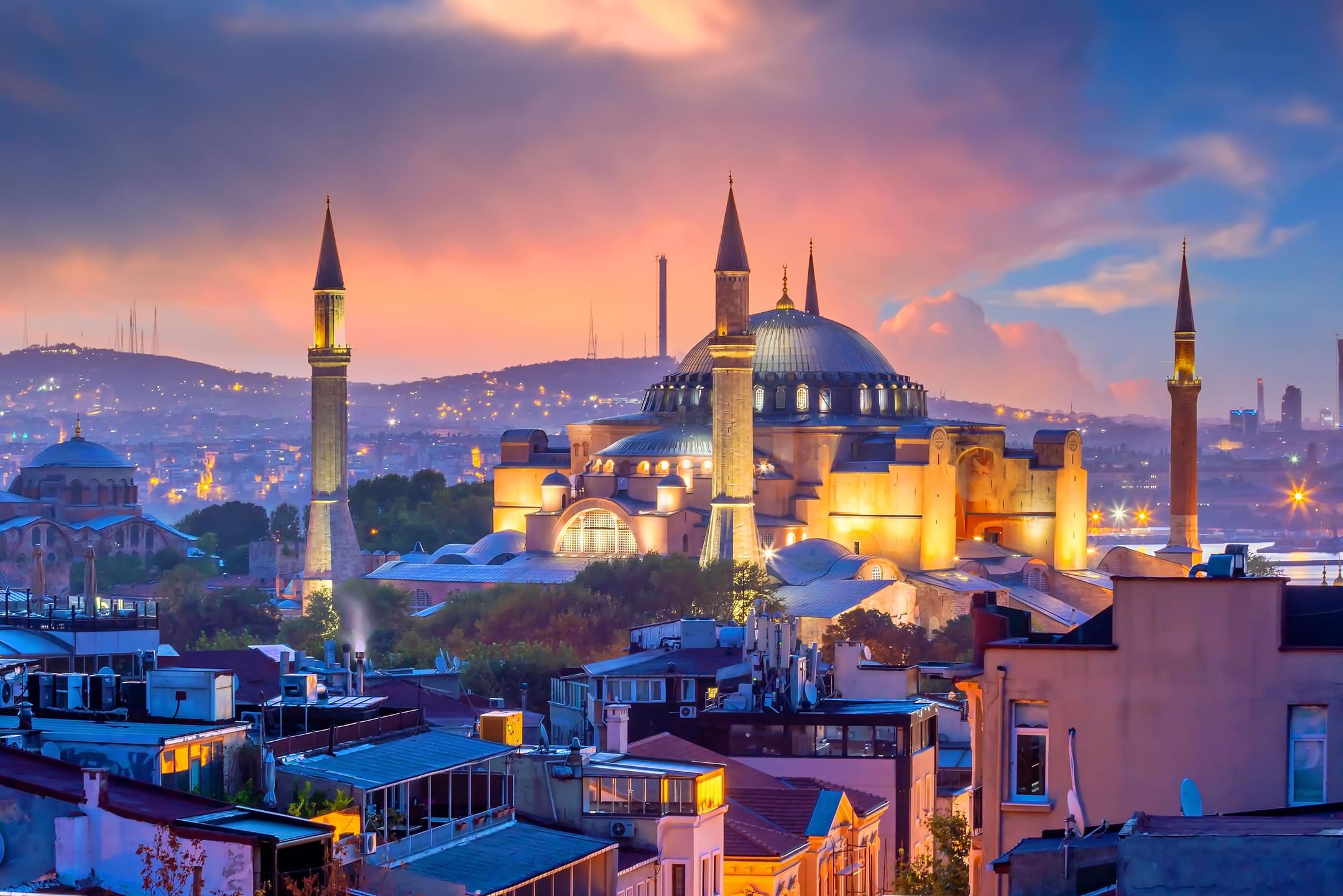
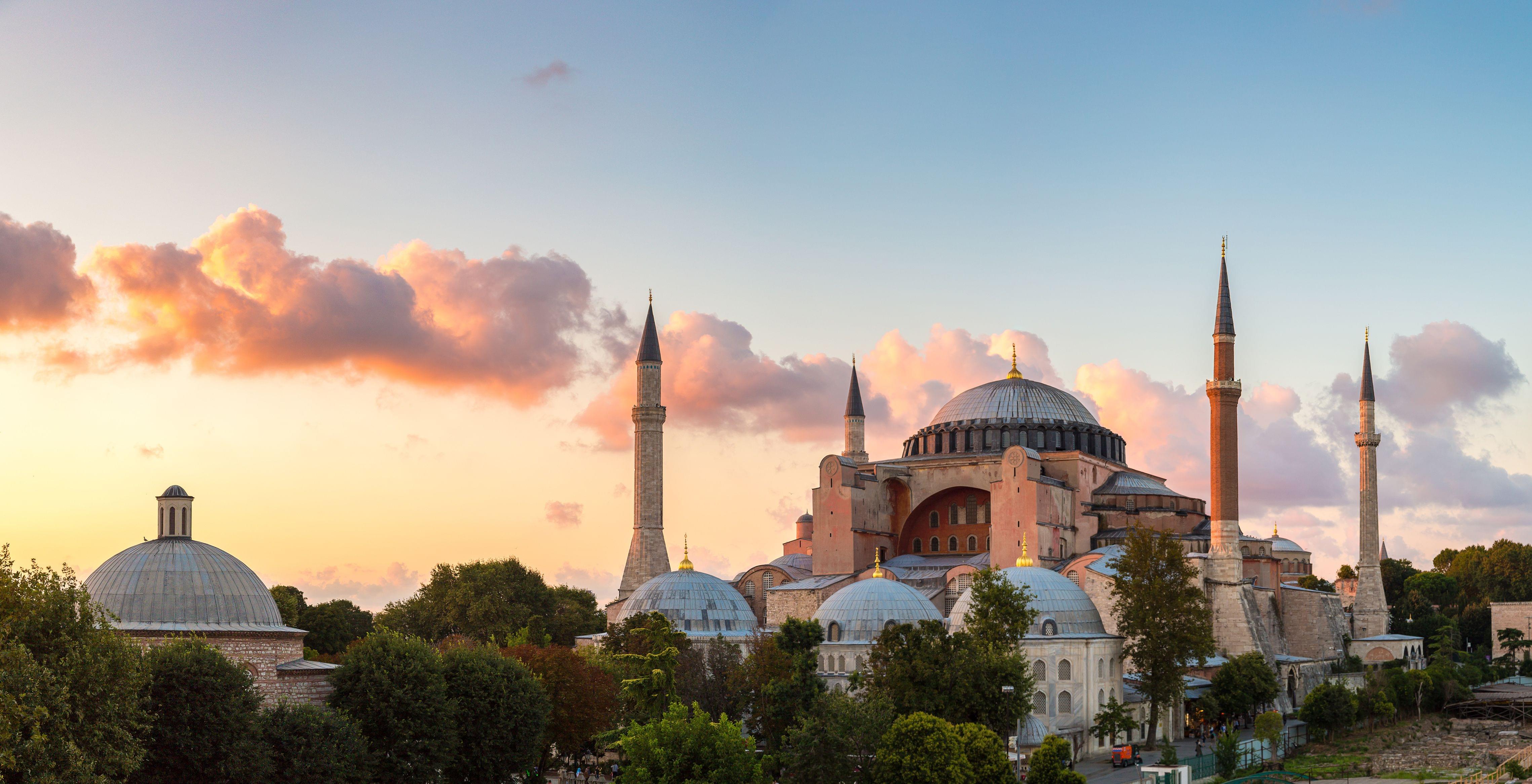
Hagia Sophia Church | A Legacy Of Faith And Architecture
A Brief Look At Hagia Sophia Church
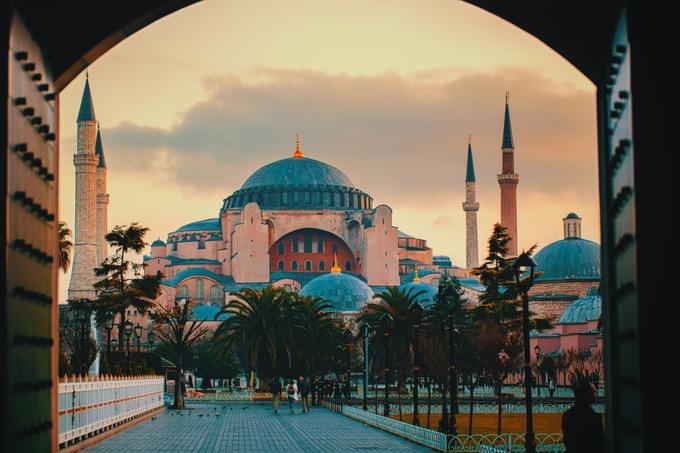
- The Hagia Sophia Church was preceded by two churches, one by Constantine the Great and another by Theodosius II, that were destroyed in riots.
- The location of this church was consecrated for the first time in 360 CE, which made it more than a millennium old by the time it was converted into a mosque.
- The material used to construct the Hagia Sophia Church came from all parts of the Byzantine empire. The Yellow stone came from Syria, Hellenic Columns were from Ephesus’ Artemis Temple, porphyry and green marble came from Egypt, and black stone came from Bosporus.
- More than 10,000 workers were employed to construct the Hagia Sophia’s ‘floating’ dome.
- The Hagia Sophia Church was the seat of Orthodox Christianity and was the largest cathedral in the world for a millennium.
Also Explore: Things to see in Hagia Sophia
Stages Of Hagia Sophia Church
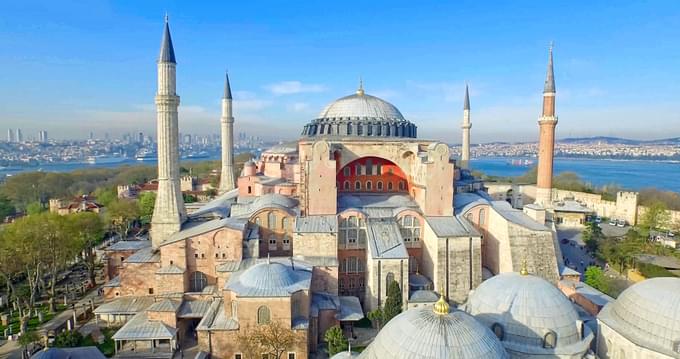
The first church constructed at the location of the modern-day Hagia Sophia was a replacement for an ancient Pagan temple. Referred to as the Magna Ecclesia in Latin or the ‘Great Church’, Constantine’s Church was commissioned by the Roman Emperor Constantine the Great and was inaugurated by his successor, Constantius II, in 360 CE. Constantine’s Church had a basilica with a wooden roof, an atrium, and a nave that had two or four aisles, each of which carried a gallery storey. The Magna Ecclesia survived for half a century and was burned down in 404 CE in riots. The church was later revived by Theodosius II.
Also Explore: Restaurants near Hagia Sophia
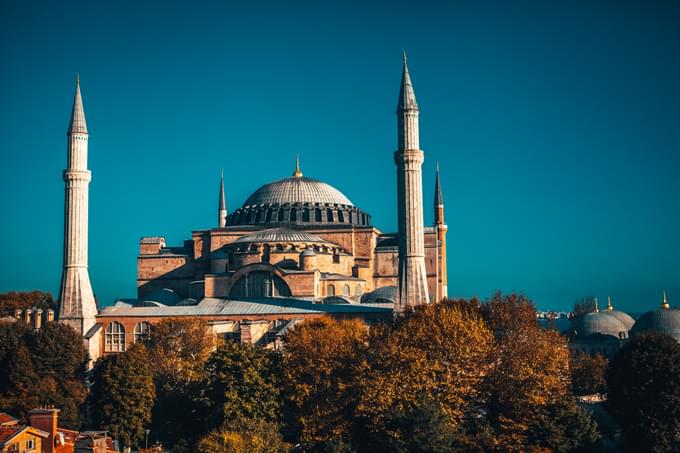
After the destruction of Constantine’s Church, Theodosius II ordered the restoration and renovation of the damaged structure. The second church was inaugurated by the emperor in 405 CE and survived for more than a century. Theodosius II’s Church had the classic Byzantine architectural features, like the atrium, a narthex, and a basilica with many galleries. Theodosius II’s Church was completely destroyed during the Nika Revolts of 532. Marble blocks from this church are on display in the courtyard of the third church, the modern-day Hagia Sophia.
Checkout: Hagia Sophia Dome
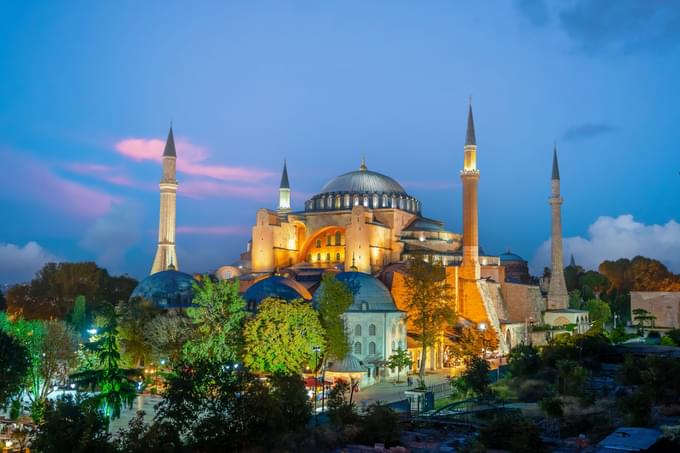
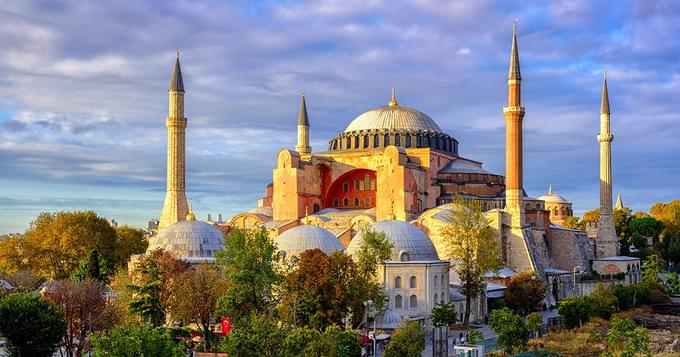
The Hagia Sophia Church was commissioned by the Byzantine emperor, Justinian the Great. Created by architects Anthemius of Tralles and Elder Isidore of Miletus, the material used in the construction came from all over the empire. It was inaugurated in 537 CE and was the largest cathedral in the world for a millennium. The seat of the Orthodox Church, Hagia Sophia was destroyed numerous times over the centuries by earthquakes and fires. The eighth-century Iconoclasm and the ransacking by Latin Christians during the Fourth Crusade led to the loss of mosaics and other art relics. The Hagia Sophia Church had been a Roman Catholic Cathedral in the thirteenth century before being converted back to Orthodoxy by the Byzantines in the fourteenth century.
Checkout And Book: Hagia Sophia & Topkapi Palace Combo Tour
Hagia Sophia Church Today
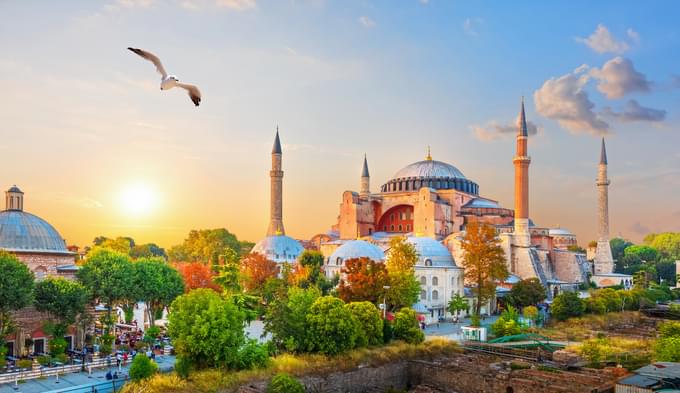
Hagia Sophia Church FAQs
What happened to the church of Hagia Sophia?
The Hagia Sophia Church was converted into the first imperial mosque of Istanbul when the city fell to the Ottoman Empire in 1453. The Hagia Sophia was preceded by two churches, both of which had been burnt down in separate riots through the centuries. Today, Hagia Sophia is a UNESCO World Heritage Site, representing its historical and cultural significance.
Is Hagia Sophia Catholic or Orthodox?
The Hagia Sophia Church was the seat of Orthodox Christianity and the world’s largest cathedral for centuries. However, from 1204 CE to 1261 CE, it had been converted into a Roman Catholic Church by Latin Christians who had ransacked it during the Fourth Crusade.
You can Also Checkout: Ceremonial Hall of Dolmabahce Palacel
Who built Hagia Sophia and why?
The Hagia Sophia was constructed on the orders of the Byzantine Emperor Justinian the Great. The previous church at the location, constructed by Emperor Theodosius II, had been burnt down in riots. Emperor Justinian wished to construct a magnificent church to replace the destroyed old church.
Why is Hagia Sophia famous?
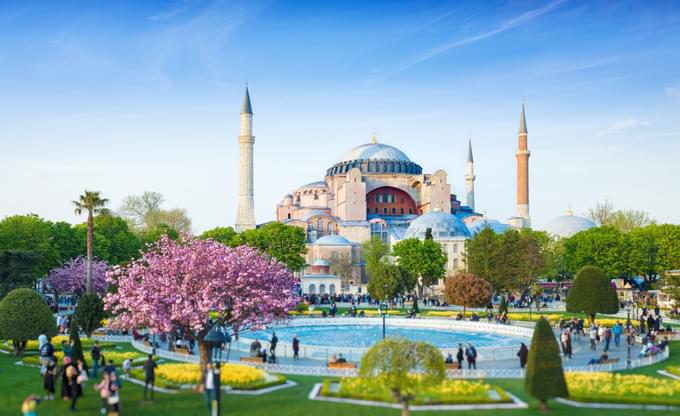
The Hagia Sophia is the most distinguished landmark of Istanbul and a living testimony of the Turkish capital’s fascinating past. It was once the religious, artistic and political hub of the Byzantine empire. The structure, deemed as one of the world’s greatest monuments, was the world’s largest cathedral for a millennium. When Constantinople (present-day Istanbul) fell to the Ottomans in the mid-fifteenth century, the Cathedral was converted into a mosque. It was with the 20th-century modernisation of Turkey that the Hagia Sophia became a museum, and was recently reconverted back into a mosque. Hagia Sophia is a unique amalgamation of Christian and Islamic traditions and is one of the world’s greatest architectural and cultural icons.
You can Also Like to Read: Plan Your Visit To Topkapi Palace
When was Hagia Sophia converted into a mosque?
The Hagia Sophia was converted into a mosque in 1453 when the Byzantine capital Constantinople had fallen to the Ottoman Empire.
Why did the Ottomans convert the Hagia Sophia into a mosque?
The conversion of the Hagia Sophia Church into the first imperial mosque of Istanbul symbolised the transition of power from the Byzantines to the Ottomans. The Christian elements were never destroyed but were covered up, which reinforced the image of the Ottomans as the legitimate successors of the Byzantine Empire. Also, a Byzantine Cathedral did not hold relevance in the new empire. Hence, it was turned into a mosque as per the religious beliefs of the city’s new rulers.
Book Now: Galata Tower Tickets
Which are the best places to eat near Hagia Sophia?
Here are some of the top restaurants in Istanbul near Hagia Sophia:
- Matbah Ottoman Palace Cuisine: Experience authentic Ottoman flavors in a stunning setting.
- Sarnic Restaurant: Enjoy Turkish cuisine in a charming underground cistern.
- Seyru Sefa: Delight in delicious kebabs and traditional dishes with a beautiful view.
- Alemdar Restaurant: Taste a variety of Turkish delights amidst a warm ambiance.
- Balikci Sabahattin: Savor fresh seafood dishes in a historical setting.
Tickets & Tours